
What does your credit score actually mean?
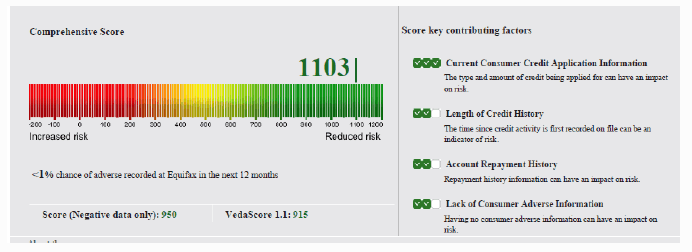
Your credit score is essentially an indication of your creditworthiness based on the information contained in your credit report.
It can be influenced by things such as how often you apply for credit, the type of credit you apply for, how you manage your existing loans and credit cards, and whether there is any adverse information on your file.
As I mentioned above, for home loan lending, a score of around 600 is generally considered the starting point. However, I wouldn’t get too caught up in chasing a particular number. A score above 600 doesn’t guarantee that a loan will be approved, and being below it doesn’t necessarily mean that you can’t get a home loan.
Different lenders have different credit policies and risk appetites. From my perspective, the more useful question is often:
“What is sitting behind the score, and what is the lender going to see when they look at your credit report?”
That is where things such as your repayment history, recent credit applications and any previous credit issues become particularly important.
Your repayment history matters
One of the important things a lender can see is your recent repayment history.
This gives them a picture of whether you have generally been making repayments on your loans and credit facilities on time.
There is a little bit of leeway in the system because lenders understand that occasionally a payment can simply be overlooked. Perhaps a direct debit came out of the wrong account, you were a few dollars short on the day, or you changed banks and forgot to update your payment details.
My advice, though, is not to rely on the grace period. If you realise you’ve missed a repayment, fix it as quickly as possible. As a rule of thumb, I’d be looking to rectify it within a week or so, rather than letting it sit there.
The easiest way to avoid the issue is to automate repayments where possible and make sure there is always enough money sitting in the relevant account before the repayment falls due.
It sounds simple, but I’ve seen late payments arise from fairly innocent administrative mistakes, and the lender looking at your credit report later doesn’t necessarily know the story behind what happened.
Having a credit card isn’t necessarily a bad thing
Another misconception is that simply having a credit card is bad for your credit score. It isn’t necessarily. Having credit and demonstrating that you can manage it responsibly can form part of a healthy credit history.
If you have a credit card and consistently make your required repayments on time, that demonstrates a very different pattern of behaviour to someone who regularly misses repayments.
Where you need to be more careful is how often you are applying for new credit. Every time you formally apply for a new credit card, personal loan, home loan or another form of credit, that application can appear as an enquiry on your credit report.
And there is an important point here:
Closing the credit card afterwards doesn’t undo the enquiry.
The fact that you applied for the credit remains part of your credit history.
Chasing credit card points can have an unintended consequence
This is particularly relevant if you like applying for new credit cards to collect bonus frequent flyer or rewards points. From your perspective, you might simply be thinking:
“I’ll get the 100,000 bonus points, meet the minimum spend, pay the card off and close it.”
Nothing necessarily wrong with that in isolation. The problem is that the lender assessing your next home loan doesn’t necessarily know why you applied for those cards. What they can see is a pattern of applications for new credit.
And this is where it becomes useful to think about it from the lender’s perspective.
Based on their experience, someone who is frequently applying for credit cards, personal loans or other short-term credit may be doing so because they are relying on new credit to help manage their cash flow.
You may know that you were simply chasing airline points. The lender may just see someone who keeps applying for access to more money.
That doesn’t mean one credit card application is going to ruin your chances of getting a home loan. It is more about the overall pattern.
So if you’re planning to apply for a home loan over the next 6 to 12 months, I’d be a little more selective about applying for new credit.
Sometimes those bonus points may not be worth another enquiry sitting on your credit report.
What about Buy Now, Pay Later?
Buy Now, Pay Later is another area people sometimes overlook because it doesn’t necessarily feel like taking out traditional credit. But it is still a form of short-term finance, and using or applying for these facilities can affect your overall credit profile.
Again, what concerns a lender is often not one transaction in isolation.
It is the pattern. If your credit history shows repeated applications for credit cards, personal loans and Buy Now, Pay Later facilities, the lender may start asking whether you are using short-term credit to help manage your day-to-day cash flow.
That may not actually be the case, but it is worth being conscious of the picture your credit report may be presenting.
What about defaults?
A default is obviously more serious than an isolated late repayment or credit enquiry. That doesn’t necessarily mean you can’t get a home loan, though.
I regularly say that with lending, context matters.
If there has been a previous credit issue, I’d want to understand:
- what happened
- when it happened
- how much was involved
- whether it has been resolved
- what your financial conduct has looked like since.
This is also where choosing the right lender becomes particularly important, because different lenders can take quite different views of the same credit history. What one bank may be uncomfortable with, another lender may be prepared to consider depending on the circumstances.
And what about financial hardship?
If you genuinely find yourself struggling to meet repayments, don’t avoid talking to your lender simply because you’re worried about your credit score.
A formal financial hardship arrangement can form part of your credit history and may be something a future lender considers when assessing an application.
However, simply allowing repayments to continue falling further and further behind can create a much bigger issue. If there is a genuine problem, it is generally better to deal with it early rather than hope it goes away.
Should you check your own credit report?
If you’re thinking about applying for finance and have any concerns about what might be sitting on your credit report, I think it can be worthwhile checking it beforehand.
I’d particularly consider doing this if you have previously missed repayments, applied for quite a few credit facilities, regularly changed credit cards, experienced financial hardship or simply haven’t looked at your credit report for a long time.
You can obtain a free copy of your credit report from Experian here:
Get your free Experian credit report
Checking your own credit report won’t negatively affect your credit score, so there’s no need to worry that simply looking at it will create the same sort of enquiry as applying for a loan.
It means you can understand what a prospective lender is likely to see before an application is lodged rather than discovering an issue afterwards. And if something does need to be explained or addressed, we can factor that into the lending strategy from the outset.
My five takeaways
If I had to boil all of this down, I’d keep it pretty simple:
- Pay your loans and credit cards on time. If you accidentally miss a repayment, fix it quickly.
- Think before applying for new credit, particularly if you’re planning to apply for a home loan in the foreseeable future.
- Closing a credit card doesn’t erase the fact that you applied for it.
- Be conscious of short-term credit, including Buy Now, Pay Later and repeated credit card applications.
- Don’t become obsessed with the credit score itself. The number matters, but what sits behind it can be just as important.
And if you’re looking to buy, invest or refinance, it is worth having the conversation before you start lodging applications.
Understanding your credit profile and choosing the right lender from the outset can be an important part of getting the right strategy, right structure and right solution in place
| Tags:Home Loans |